Short answer: in 2026, an application or a tender for a public contract cannot be submitted by fax. Above €40,000 excl. VAT, transmission must go through the buyer profile (the e-procurement platform) designated in the contract notice: a fax arriving on the closing day will be rejected as irregular. Fax, on the other hand, remains perfectly admissible — and is sometimes expressly provided for in the tender rules — for everything that revolves around the procedure: requests for information, subcontracting notifications, claim statements, follow-ups, site correspondence, contracts below the thresholds. Knowing where the line falls avoids two symmetrical mistakes: losing a contract by faxing your tender, and losing a right of appeal because you assumed a fax counts for nothing.
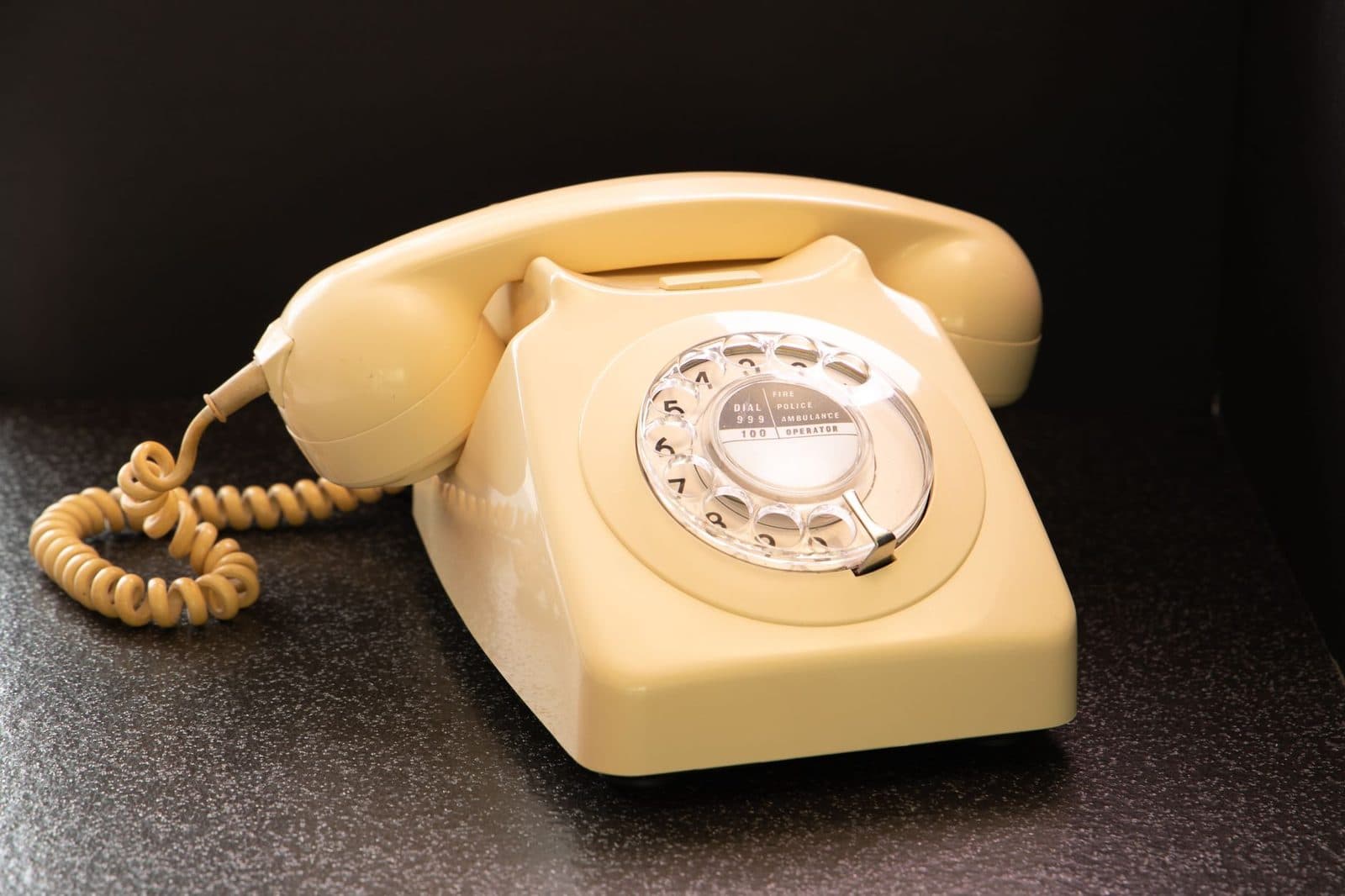
Public procurement has been one of the fastest digitalisation projects in French public administration. In 2018, the mandatory e-procurement threshold fell to €25,000 excl. VAT; it subsequently followed the increase of the advertising exemption threshold to €40,000 excl. VAT. The result: within a handful of years, fax went from being an official channel — it was written in black and white in the old procurement codes — to a residual one. "Residual" does not mean "extinct". Local authority purchasing departments, site management offices, administrative court registries and a good share of project managers still print fax numbers on their letterheads, and still use them.
What digitalisation actually prohibited
The French public procurement code requires that communications and exchanges of information between buyer and economic operator take place electronically, for contracts meeting a need whose estimated value is equal to or above the formal procedure thresholds, and more broadly from €40,000 excl. VAT upwards for the transmission of applications and tenders. The wording matters: the text refers to electronic means, not to a "platform". Technically, an online fax is an electronic means. Legally, that is not enough, because the rules add a further constraint: transmission must take place on the buyer profile, i.e. the platform designated in the notice (PLACE for central government, Maximilien, e-marchespublics, AWS, Achatpublic.com, Mégalis Bretagne and the like, depending on the buyer).
Three reasons explain this lock-in, and they are instructive in understanding what fax cannot do:
- Enforceable time-stamping. The buyer profile issues an acknowledgement of receipt time-stamped to the second, against a reference clock. A fax machine's transmission report carries the time of the sending machine — which anyone can adjust.
- Sealing the close of the consultation. Submission is mechanically blocked at the deadline; on the buyer's side, the bids remain encrypted until opening. A fax, by contrast, lands on a tray in an open office.
- Integrity of the content. A detailed bill of quantities, a technical proposal with drawings, a 300-line unit price schedule do not survive a fax at 200 dpi in black and white. This is not only a legal matter, it is a matter of legibility.
Remember the rule: everything that makes up the bid — application, tender, variant, clarification requested during evaluation — goes through the buyer profile. The rest may travel by other channels, provided the tender rules do not forbid it.
The expressly provided exceptions
The code sets out cases in which the buyer may require or accept non-electronic means: where the nature of the information makes electronic transmission inadequate (models, samples, large-format drawings), in the event of an IT security breach, or for particular confidentiality reasons. Defence and security contracts have their own regime. Finally, below €40,000 excl. VAT — the well-known direct-award zone — the buyer organises exchanges as it sees fit: many small municipalities still consult three companies by telephone, email… or fax.
Where fax retains genuine usefulness
Site correspondence and the life of the contract
Once the contract has been notified, the logic changes. The buyer profile is for submission; performance plays out between the client, the project manager, the health and safety coordinator and the contractors. Contract-specific administrative clauses very often refer to the CCAG Travaux (general terms for works contracts), which governs the notification of service orders, joint site records and formal notices. The 2021 CCAG-Travaux gives priority to electronic means, but allows other modes of notification provided they make it possible to establish the date of receipt with certainty. Registered letter, delivery against receipt — and, in everyday site practice, fax with a transmission report, where the contract provides for it.
This is where fax retains a concrete advantage: on the sender's side it produces a dated, detailed log — number called, duration, page count, outcome — without depending on the recipient's goodwill. An email can sit for three weeks without a read receipt; a transmission report reading "OK / 4 pages" is not so easily argued with.
Claim statements and running deadlines
In performance-related disputes, the CCAG Travaux deadlines are short and unforgiving: thirty days to contest a final account, fifteen days for a service order, with time-barring at the end of the road. When the deadline expires on a Friday at 5 p.m. and the post office is closed, sending by fax — backed up the same day by a registered letter — is a classic practice among construction lawyers. Administrative courts assess each case on its merits, but a fax received within the deadline and confirmed in writing has more than once been accepted as an unequivocal expression of the challenge. On the general evidentiary weight of fax, we set out the reasoning in our article on the legal value of fax.
The administrations that never unplugged
Try it yourself: look up the contact details of the procurement department of a hospital, a fire and rescue service, a chamber of agriculture or a consulate. In most cases, the fax number is still there. This is not nostalgia: it is a fallback channel the organisation keeps because it works when the mail server is saturated, when the platform provider is down, or when the contact has no account on the portal.
The hardware problem: the company fax no longer gets through
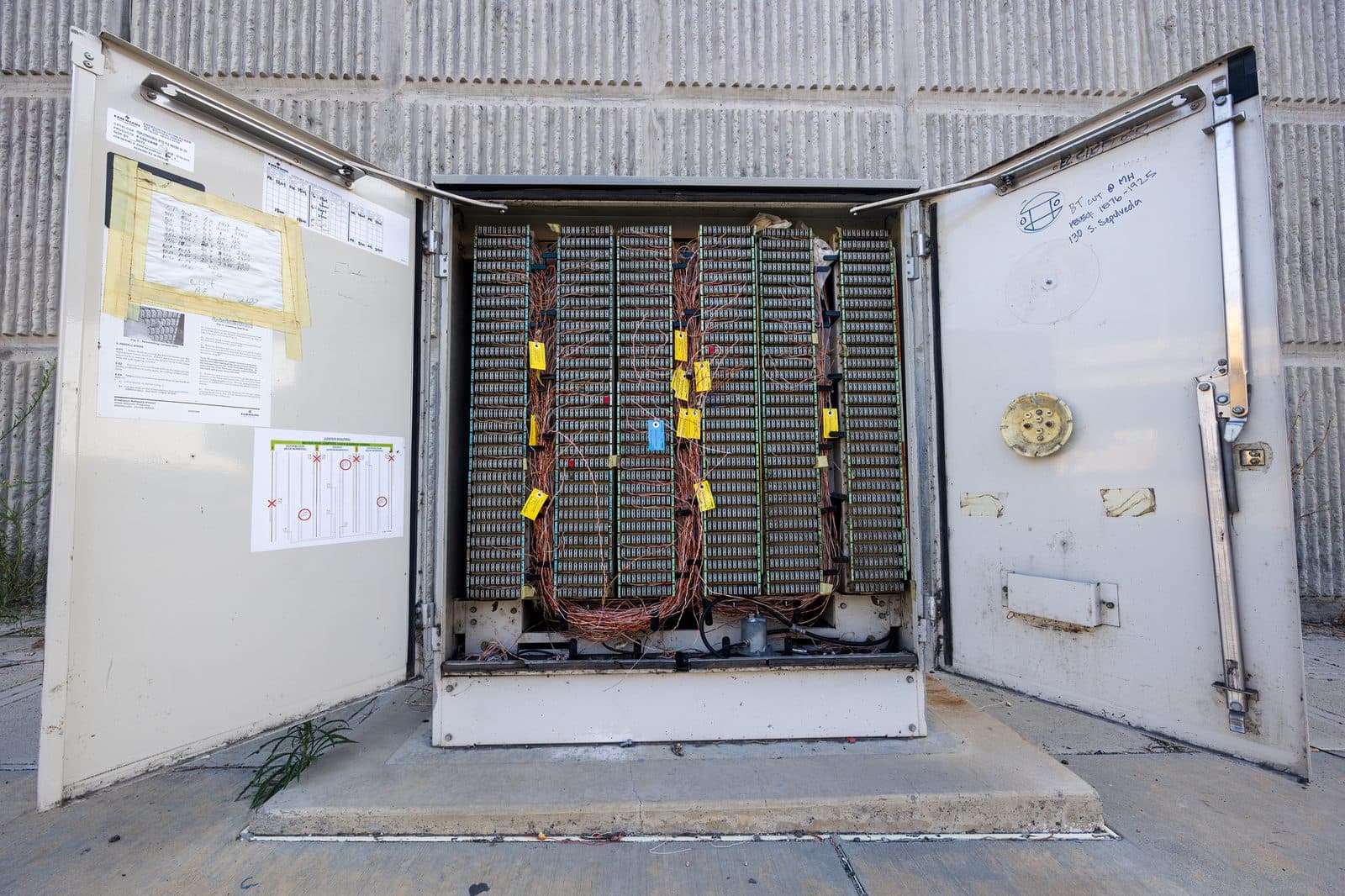
There is an irony in all this. At the very moment fax becomes useful again as a fallback channel, the line that carried it is disappearing. Since 2018, Orange has no longer sold new PSTN lines, and the technical shutdown of the copper network is progressing in batches of municipalities — Arcep publishes the timetable and the list of affected areas, and the first large-scale shutdowns are now hitting entire départements. A construction SME that kept its fax machine in the site manager's office wakes up one morning to find the wall socket silent, or that transmissions have been failing systematically since the switch to fibre.
Plugging the machine into the "TEL" port on the router is no lasting fix: voice over IP compresses the signal, and modem tones cope badly with jitter and packet loss, even with the T.38 protocol that is supposed to carry fax end to end. We dissected these failures in our article on fax over VoIP and the T.38 protocol.
For a company bidding for public contracts, the sensible response comes down to three points:
- Keep a reachable fax number, hosted on an online fax service, so that buyers who have nothing else can still reach you. Our guide on how to keep your number after the end of PSTN explains number portability.
- Send from a workstation, in PDF, without depending on a machine. Incoming faxes arrive in an email inbox dedicated to the procurement team.
- Systematically archive transmission reports together with the documents sent, in the contract file.
Scanning properly what you send
The Achilles' heel of administrative faxing remains legibility. A signed contract form, scanned in haste with a smartphone held at an angle, arrives grey and skewed. For companies handling bulky files — technical proposals, site health and safety plans, insurance certificates, DC1/DC2 forms, URSSAF compliance certificates — an automatic duplex document feeder scanner changes everything: thirty pages scanned in a single pass, as one PDF, hands-off. For site visits, a USB-powered portable scanner fits in a bag and is enough for a joint site record.
Recommended settings: black and white, 200 dpi, slightly increased contrast, strict A4 format. The full parameters are detailed in our guide on illegible faxes and scanning.
Securing and archiving: what the buyer may ask of you
A tender file contains sensitive data: tax and social security certificates, company registration extracts, bank details, sometimes named CVs in the technical proposal. The GDPR applies in full, and the CNIL regularly points out that security must be "appropriate to the risk". A fax machine sitting in an open-plan office, printing out bank details for anyone to pick up, is not.
Three practical requirements:
| Requirement | Traditional fax machine | Online fax |
|---|---|---|
| Named access to the received document | No — shared output tray | Yes — dedicated email inbox |
| Traceability of sends and receipts | Machine log, erased | Time-stamped log, retained |
| Retention for the duration of the contract | Paper, binders | Archived PDFs, full-text search |
| Continuity in the event of PSTN shutdown | No | Yes |
On archiving, bear in mind that public contract documents must be kept for a long time: five years for standard contractual documents, ten years for those falling under the ten-year structural warranty in works contracts. An encrypted external hard drive for local backups and filing by contract number beat a cupboard full of elastic-band folders. And for paper originals destined for the skip, a cross-cut shredder is the logical complement to a credible confidentiality policy — the CNIL considers secure destruction to be a basic measure.
On the regulatory side, our article on fax confidentiality and the GDPR sets out the obligations in detail.
Five costly mistakes
- Submitting a tender by fax because the platform was down. If the buyer profile is unavailable, document it (screenshots, time stamps, call to support) and alert the buyer immediately. A tender submitted outside the platform is irregular, unless the buyer expressly decides to extend the deadline.
- Faxing a request for information on the last day. Tender rules often set a cut-off date for questions (D-6 or D-10). After that date, the buyer is under no obligation to reply, whatever the channel.
- Believing a transmission report proves the document was read. It proves delivery to a number, nothing more. Always back it up with an email or a registered letter when a time-bar deadline is at stake.
- Faxing a signed document with no cover sheet. A cover sheet identifies the sender, the contract concerned, the number of pages and the confidentiality notice. Our cover sheet template can be adapted in two minutes.
- Failing to check the dialling code for a foreign buyer. Cross-border contracts, international organisations and diplomatic missions sometimes require fax. The list of destinations and numbering formats is on our supported countries page.
Frequently asked questions
Can an application still be submitted by fax below €40,000 excl. VAT?
Yes, if the buyer accepts it. Below that threshold, the procedure is unregulated: the buyer may consult by telephone, email, post or fax. Always check what the request for quotation or letter of consultation says: if it specifies a single channel, stick to it.
Does a fax count as notification under the CCAG Travaux?
It can count as notification if the contract (the specific administrative clauses or the applicable CCAG) provides for that mode and if it makes it possible to establish the date of receipt with certainty. The 2021 CCAG-Travaux gives priority to electronic means via the buyer profile or an agreed mailbox. In practice, fax for speed and confirm by registered letter with acknowledgement of receipt.
How do I reply to a buyer who only provides a fax number?
Use an online fax service: you send a PDF from your workstation, you receive the transmission report by email and you file it in the contract folder. The sending form requires no hardware. For receiving, an inbox dedicated to the purchasing team avoids scattering: see our guide on receiving a fax by email.
Should faxes sent to a public body be kept?
Yes. Keep the PDF transmitted and the transmission report together, named with the contract number and the date. In the event of a dispute, it is the pairing of document plus proof of transmission that carries weight, not one without the other.
What should I do if my fax machine has stopped working since the switch to fibre?
This is the classic symptom of a move to VoIP. Rather than investing in an ATA adapter and hit-or-miss settings, port the number to an online service. The machine can then be recycled through the WEEE scheme.
Key takeaways
- Applications and tenders above €40,000 excl. VAT: the buyer profile is mandatory. A fax is irregular, with no tacit exception.
- Below the thresholds and during performance, fax remains an accepted channel where the contract provides for it — and often the only one some departments will accept.
- The transmission report proves delivery, not reading: back it up with a registered letter whenever a time-bar deadline is running.
- The physical fax machine is doomed by the copper network shutdown: keep the number, ditch the machine.
- Scan cleanly and archive systematically: a contract file must be kept for five to ten years, transmission reports included.
Useful sources and references: the French public procurement code (articles L. 2132-2 and R. 2132-7 et seq.), CCAG Travaux 2021 (order of 30 March 2021), technical factsheets from the Legal Affairs Directorate of the Ministry of the Economy on public procurement digitalisation, CNIL recommendations on data security, and the copper network shutdown timetable published by Arcep.
Tagsfaxsecuritypaperless