Short answer: yes, you can keep your fax number when your analogue line is shut down. Landline number portability applies to fax numbers just as it does to any French geographic number: all you have to do is obtain your RIO, pass it to your new operator or online fax service, and — above all — do not cancel the line before the port has gone through. In practice, allow around ten working days. The number printed on your prescription pads, your brochures and your letterheads stays valid.
It's the question that has come up most often over the past eighteen months in our conversations with accountancy firms, health centres and small machine shops: "My operator says my line is being discontinued. I've had this fax number since 1997, it's on all my documents, in every professional directory, on file with all my clients. Am I going to lose it?"
No. But the way you handle the migration determines everything — including whether you can receive faxes during the transition. Let's go through the mechanics in order.
Why your line is disappearing (and why it isn't up for debate)
The PSTN is closing area by area, not all at once
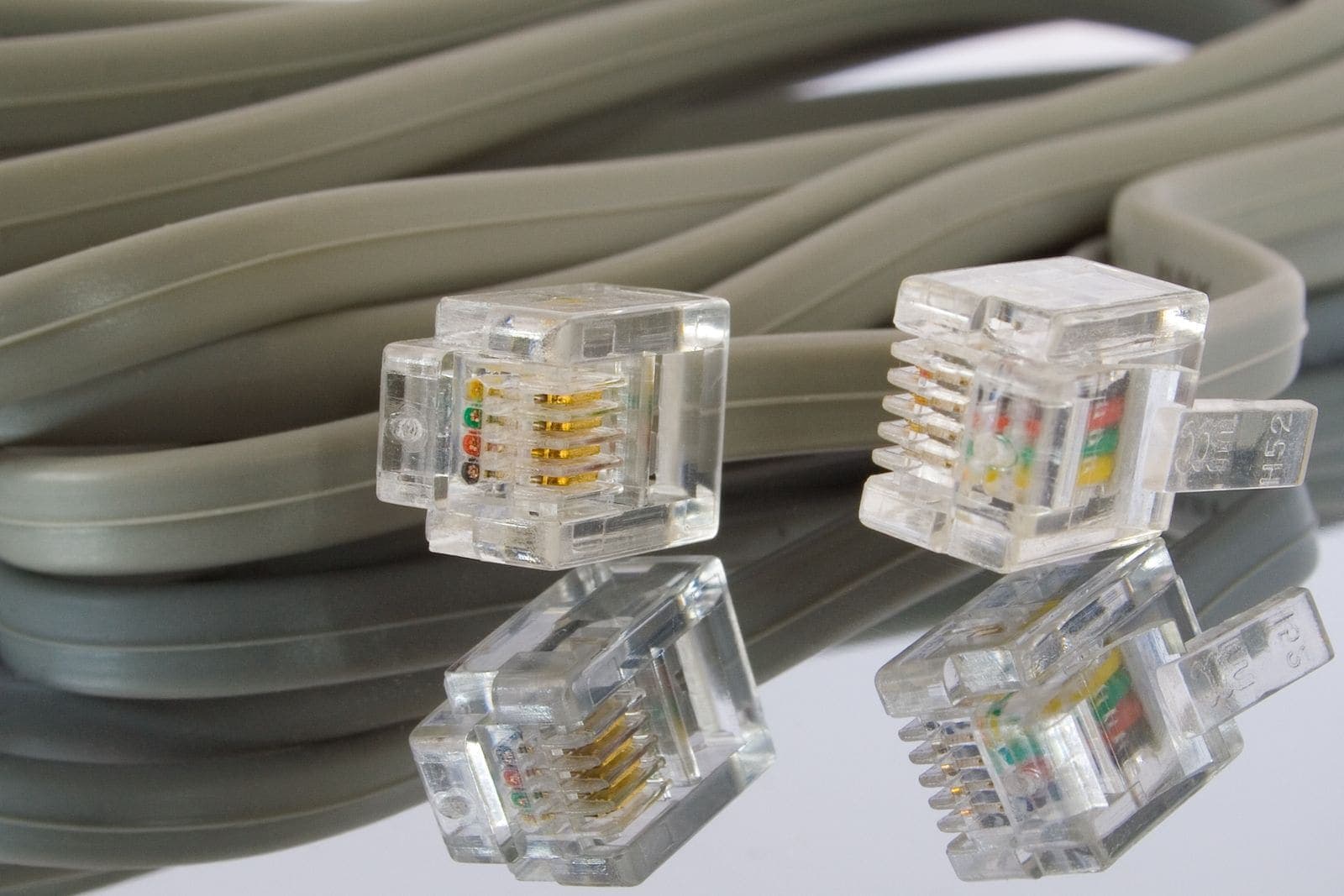
The switched telephone network — the PSTN, those copper pairs that have carried voice since the 1970s — has been on a scheduled path to extinction since Orange's announcement in 2016. New analogue lines stopped being sold back in 2018; the technical shutdown of existing lines, meanwhile, is happening in successive geographic batches, town by town, with advance notice sent to subscribers.
In parallel, the copper network itself is being dismantled: Orange, under Arcep's supervision, has begun closing the copper network area by area, on a timetable running to the end of the decade. In other words, two deadlines overlap — the end of the analogue telephone service, and the disappearance of the physical infrastructure that carries it.
In concrete terms, for a professional with a fax machine plugged into a French T-socket:
- your operator notifies you of a switchover date;
- you are migrated to a VoIP (voice over IP) offer, often via a router or SIP trunk;
- your fax machine doesn't necessarily come along for the ride.
Fax and VoIP: an unpredictable pairing
This is the part sales reps tend to gloss over. A G3 fax machine modulates analogue tones; VoIP compresses them, packetises them and copes badly with the slightest network jitter. The result: truncated pages, failed handshakes, transmissions that start over from scratch on page five.
The T.38 protocol, standardised by the ITU, exists precisely for this: it "demodulates" the fax and carries the fax data within the IP stream rather than transporting sound. But the operator has to support it end to end, the ATA adapter has to be configured correctly (echo cancellation disabled, G.711 codec forced, VAD disabled), and the fax machine at the other end has to play along too.
In practice, a physical fax machine sitting behind a consumer router remains a gamble. That's why many organisations use the switchover as an opportunity to move straight to fax-to-email, which eliminates the problem at the root: no analogue at all, and the fax becomes a PDF sent from a web interface or an email.
Portability: what the rules actually say
A fax number is a number like any other
There is no such thing as a "fax number" in legal terms. Your 01, 03 or 05 number is a geographic number under the national numbering plan administered by Arcep. The fact that you have plugged a fax machine into it rather than a handset changes nothing about its status. Landline number portability, available since 2007 and governed by Arcep decisions, therefore applies in full.
Two practical consequences:
- You can port that number to any authorised operator, including an online fax service that relies on a partner operator.
- Porting is free for the subscriber, and the receiving operator handles the process on your behalf.
The RIO, your key to the process
The Relevé d'Identité Opérateur (operator identity statement) is a 12-character alphanumeric string that uniquely identifies the line to be ported. Without it, no request will succeed.
To obtain it on a landline: call 3179 from the line in question. The voice server reads it out and sends it by SMS or post depending on the operator; it also appears in the customer account area of most providers. Write it down exactly as given, respecting capitals and digits — a typing error is the single most common reason for rejection.
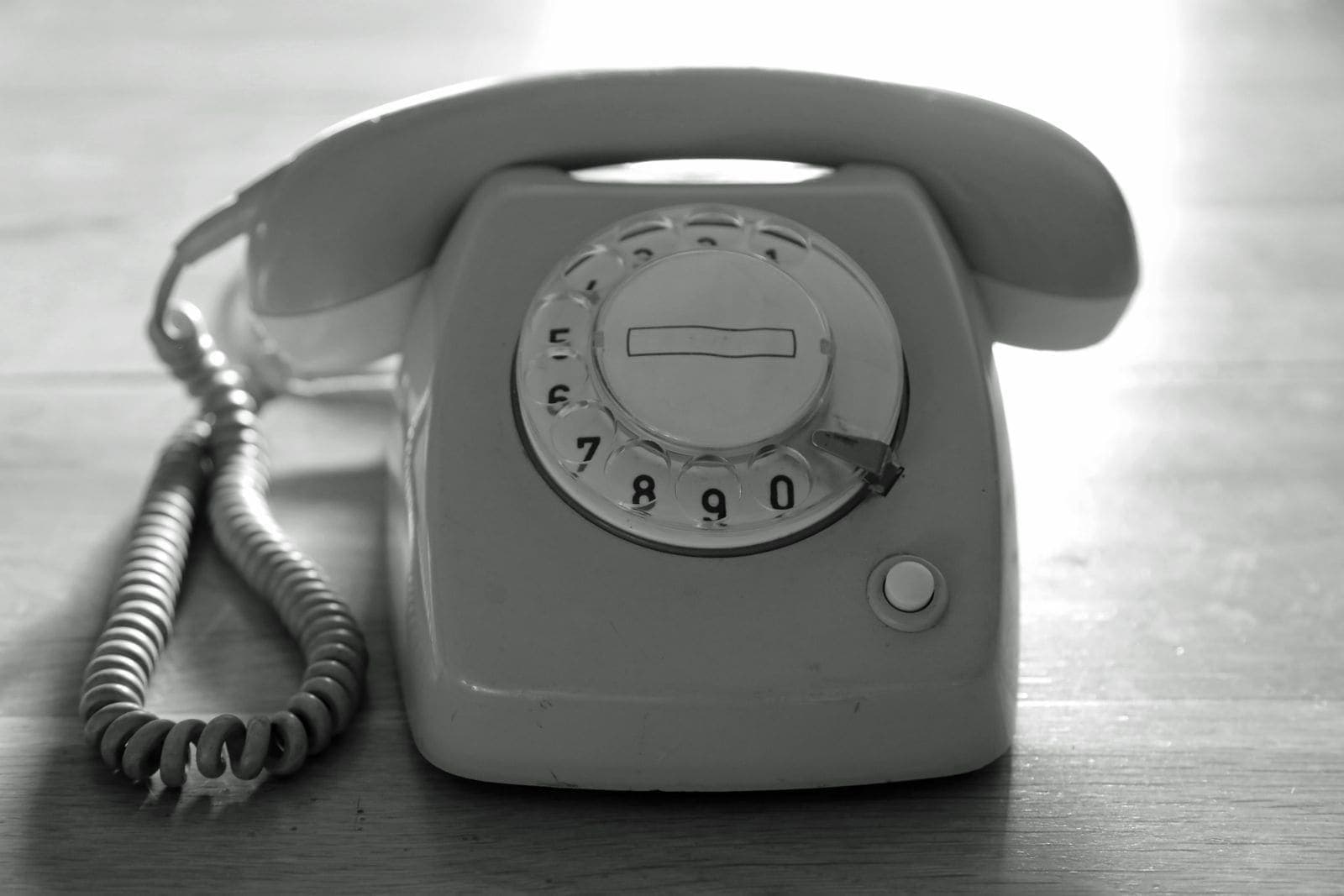
One small detail that matters when the fax line has no telephone attached: keep a basic corded analogue telephone or an adapter on hand, if only to dial 3179 and check the dial tone during the migration. It's the five-euro accessory that saves you half a day of guesswork.
The details that must match character for character
Porting fails when the information in your application doesn't exactly match what the losing operator holds on file:
| Item | Classic pitfall |
|---|---|
| Company name | "SCM des Tilleuls" with one, "S.C.M. Les Tilleuls" with the other |
| SIRET number | Site closed, head office relocated since sign-up |
| Installation address | Office number or address line 2 missing |
| Line holder | Former partner who retired, never updated |
| RIO | Confused with the contract number |
Before you start anything, dig out your latest operator invoice and read the "account holder" line. In a medical practice that has seen three generations of partners, that's often where it all hinges.
The procedure, step by step
1. Take stock of everything the number serves
A single line may carry more than you think: the fax machine, but also a back-up card payment terminal, an alarm, a lift, a remote monitoring system. Those devices can't be ported — they have to be replaced. Note everything down before you touch the contract.
2. Get the RIO and prepare your supporting documents
Dial 3179, then gather: a Kbis extract or SIRENE company status report less than three months old, your latest invoice from your current operator, ID for the legal representative, and bank details for the new service. A portable document scanner, or simply a decent scanning app, avoids back-and-forth over an illegible photo.
3. Sign up with the new operator or online fax service
They are the ones who initiate the port. You give them the RIO; they take care of the rest with the losing operator. You pick an effective porting date — go for a Tuesday or Wednesday morning, never a Friday or the day before a long weekend: if something goes wrong, you'll have working days ahead of you to put it right.
4. Do not cancel the old line
This is the golden rule, and the most expensive mistake. A porting request constitutes cancellation of the old contract as of the porting date. If you cancel it yourself beforehand, the number goes back into the operator's general pool and becomes ineligible: it is then frozen for several months before reallocation, and you will not get it back. A number lost this way is lost for good.
5. Test before you tell anyone
On the day, send yourself a fax from another number, then ask two or three regular contacts — a laboratory, a supplier, your accountant — to run a test. Check that the PDF arrives, that it's legible, and that the transmission receipt and timestamp are correct.
6. Update what needs updating
The number doesn't change, but your setup does. Take the opportunity to tidy up your materials: letterheads, stamps, email signatures. A customisable self-inking stamp ordered at the right moment saves you from spending three years with a stamp referencing a service that no longer exists.
How long it really takes
Landline porting timescales are regulated, but the reality of a business application often departs from the textbook case:
| Situation | Observed timeframe |
|---|---|
| Simple line, up-to-date details | 8 to 12 working days |
| Number within a DDI range | 3 to 6 weeks |
| Account holder needs correcting | 1 to 2 months |
| Application rejected then resubmitted | +10 working days per cycle |
Service interruption at the moment of switchover is generally a matter of minutes, sometimes a few hours. Even so, plan a fallback: temporarily keep a second receiving number provided by your online fax service, and give it to your most critical contacts.
The special cases that cause trouble
DDI numbers and number ranges
If your fax is part of a direct dial-in block (a switchboard with ten or a hundred numbers), you can't always extract a single number from the block. Some operators allow it, others require the whole range to be ported. Ask the question explicitly before you sign up.
A fax hosted on a multifunction device
Many organisations have a multifunction copier with a built-in fax module, on a lease contract with an office equipment provider. The number belongs to the subscriber, not the lessor — but the maintenance contract keeps running regardless. Check its end date before starting the migration, or you'll spend another two years paying for a fax module nobody uses.
08 numbers and non-geographic numbers
Premium-rate numbers follow separate rules. If your fax is reachable via an 0810 or 0800 number, get in touch with the service provider: portability exists, but the application goes through a different channel.
Combined voice + fax on the same line
A single number that switches automatically between voice and fax depending on the tone it detects cannot be ported "in two halves". You'll have to choose: either it becomes a pure fax number with your new service, or it stays a voice number and you take a new fax number.
After the migration: what changes day to day
Once the number has been ported to a fax-to-email service, incoming faxes arrive in a mailbox as PDFs, complete with sender metadata. Three habits to put in place from week one:
- Create a dedicated archive folder and an automatic filing rule. Statutory retention periods don't change just because the medium has gone digital.
- Back up twice. A business cloud plus an encrypted external hard drive kept in the safe covers most of the risk. An email account failure must never take ten years of correspondence with it.
- Restrict access. In a medical or legal practice, an incoming fax contains sensitive data within the meaning of the GDPR. Named shared mailbox, two-factor authentication, and an access log.
And for sending? A compact document scanner with automatic feeder remains the most worthwhile investment of the whole transition: it turns a stack of paper contracts into clean PDFs in a few minutes, without a trip to the copier down the hall.
Frequently asked questions
Can I port my fax number to an online fax service?
Yes, provided the service relies on an operator authorised by Arcep to accept ports. Check this point before signing up: not every online fax provider offers to take over an existing number.
How much does porting cost?
Nothing, on the subscriber's side. Landline number portability is free in France. What may remain are setup fees for the new service, and any balance owed on your current contract if you're still within a commitment period.
What happens if I cancel my line before the port?
The number is released, quarantined, then returned to the operator's stock. It can no longer be ported. This is irreversible: never cancel before you have written confirmation that the port has gone through.
Can my operator refuse the port?
It cannot object as a matter of principle, but it can reject an application for inconsistent details, an invalid RIO, a suspended line or an unpaid balance. Settle any disputed invoice before submitting the request.
Can my old fax machine still be useful?
For receiving, no — faxes will now arrive by email. It may possibly see out its days as a back-up scanner if it has a USB or network output. Otherwise, off to WEEE recycling: a fax machine counts as waste electrical and electronic equipment.
Do I need to tell my contacts?
Since the number isn't changing, no. A simple notice to your regular partners is enough to explain that your faxes are now received in digital form — particularly useful for confidential documents that will no longer be sitting in a paper tray.
In summary
- A fax number is an ordinary geographic number: it is portable, free of charge, just like any landline.
- The key to the whole process is the RIO, obtained by calling 3179 from the line concerned.
- Never cancel the old line: the porting request constitutes cancellation as of the porting date.
- Check the company name, SIRET number, address and account holder character by character — the number one cause of rejection.
- Allow 8 to 12 working days for a straightforward case, several weeks for a DDI range or an account holder that needs correcting.
- T.38 can keep a physical fax machine alive over VoIP, but fax-to-email removes the problem for good.
- List the line's other uses (alarm, lift, card terminal) before any switchover: those cannot be ported.
- Use the migration as an opportunity to organise your digital archiving and access rights — GDPR requires it.
Tagsfaxvoipplatformpaperless