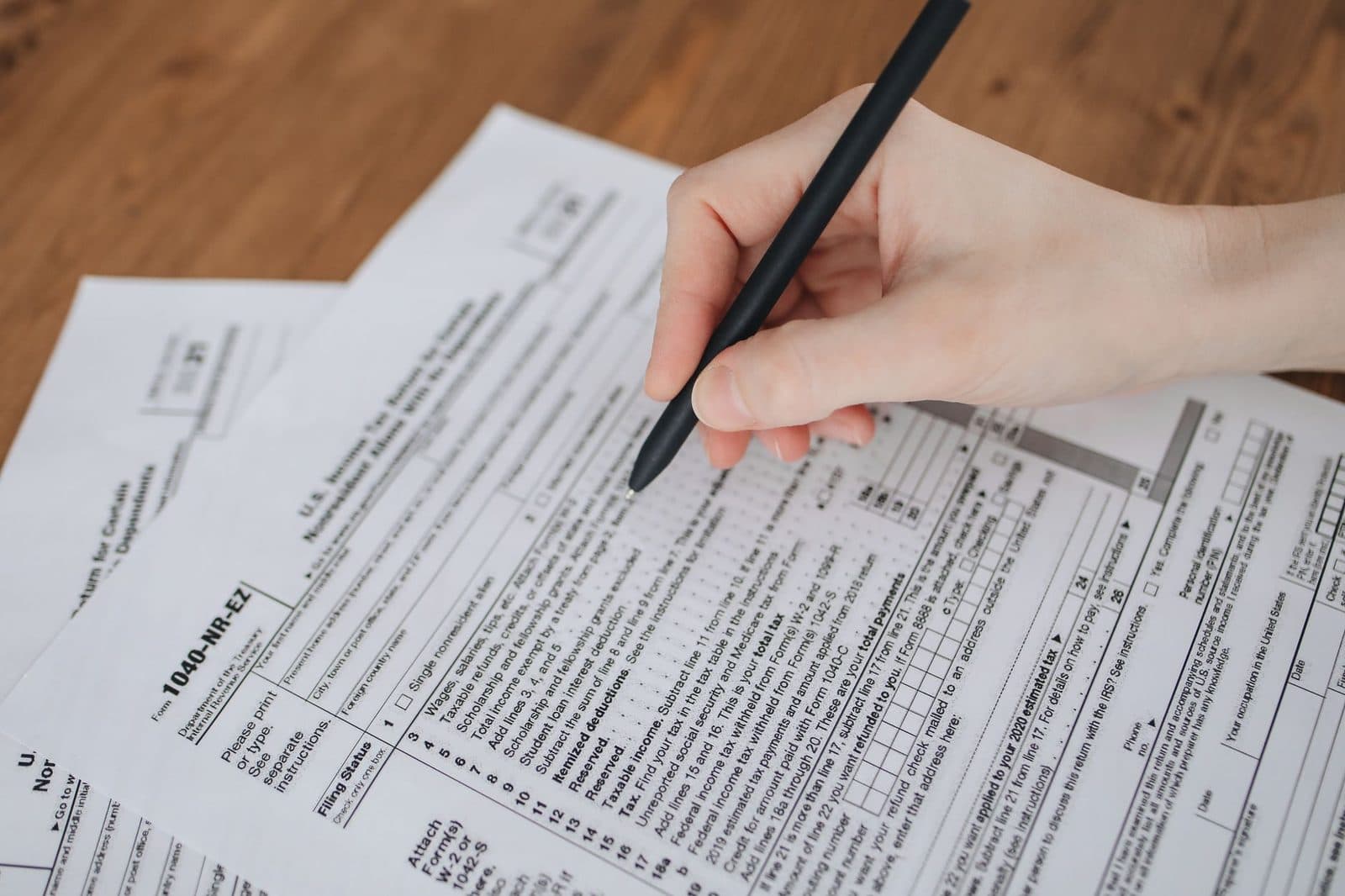
Short answer: when people talk about the Canadian fax, clinics, pharmacies and Ottawa forms come to mind immediately. But the most overlooked reservoir is commercial: in 2026, it's Canada's private sector that keeps the largest number of active, published fax numbers. Four families dominate — commercial banking and equipment leasing (pre-authorized debit forms, PAD/DDP, discharge letters), customs brokerage and freight forwarding (clearance instructions, commercial invoices, certificates of origin), trucking and logistics (bills of lading, BOLs, delivery receipts, freight claims) and franchise and distribution networks (orders, warranty claims, return authorizations). So for a European SME that sells to, buys from or ships to Canada, the practical move is to keep the fax in the toolbox — while knowing exactly who still needs it. From France, Belgium, Germany, Spain, Italy or Portugal, the dialling doesn't change: 00 1 then the ten digits, area code included (514, 450, 418, 819 in Quebec, 416, 905, 519 in Ontario, 604 in British Columbia, 403 in Alberta).
About MondialFax. This article is an informational guide, with no connection to any Canadian bank, carrier, customs broker or franchise network. MondialFax sends faxes free of charge and without sign-up to seven destinations (France, Belgium, Germany, Spain, Italy, Portugal, Canada) straight from a browser, with a daily sending limit. It does not assign a number and does not handle incoming faxes. See the Canada page and the area code directory.
Why Canadian businesses never let go of the fax machine
Three structural reasons, none of them nostalgic.
The first is legal. The Personal Information Protection and Electronic Documents Act (PIPEDA) and, in Quebec, Law 25 require security measures proportionate to the sensitivity of the data. Many in-house legal departments settled the matter fifteen years ago: a plain email carrying a bank account number or a social insurance number is a documented risk; a fax to a verified number, printed in a controlled room, was considered "reasonably secure." That reasoning has aged badly, but the internal procedures have never been rewritten.
The second is contractual. In Canadian commercial contracts, the Notices clause lists the valid channels for serving notice: registered mail, courier, fax and, more recently, email with acknowledgement. A five- or ten-year contract signed in 2019 or 2021 still imposes fax today as a channel accepted without argument. When it comes to notifying a default, renewing a commercial lease or terminating a distribution agreement, lawyers prefer the channel named in the contract.
The third is operational. The fax remains the lowest common denominator in a chain that mixes a European shipper, a freight forwarder, a broker, a driver and a warehouse. Nobody has to create an account, accept a portal invitation or download an app: one number, one page, one transmission report.
What has shifted, by contrast
Let's be honest: several Canadian B2B uses have genuinely moved off the fax.
- Customs declarations themselves now go through the Single Window and the CARM Client Portal (CCP) of the Canada Border Services Agency, mandatory for importers since the CARM rollout. The fax no longer serves to declare; it serves to instruct your broker.
- Commercial wire transfers fall under Payments Canada and its Lynx system; the fax no longer plays a part in the payment, but still does in the paper authorization that accompanies it.
- Public tenders go through SEAO in Quebec and CanadaBuys federally.
In other words: the Canadian B2B fax has retreated from the transaction and concentrated on the signed authorization and the supporting document.
Banks, leasing, commercial insurance
This is the sector that surprises Europeans used to online banking portals the most. In Canada, several institutions keep a fax number for:
- signed pre-authorized debit (PAD/DDP) requests, to debit or be debited on a Canadian account;
- discharge letters and releases of movable hypothecs, particularly when financed equipment is exported;
- balance confirmations and certificates requested by a European auditor at year-end;
- changes of authorized signatories on a business account.
For a European sender, the thing to watch is less the channel than the quality of the document. A handwritten signature scanned at 150 dpi on a grey background comes through poorly in "fine" mode and gets rejected. Before sending, convert the document to crisp black and white, keep margins of at least 10 mm, and avoid fluorescent highlighting, which comes out as black blotches. A duplex office document scanner makes an immediate difference to the acceptance rate here, especially for bundles of more than five pages. The settings are covered in detail in our guide illegible fax: scanning, resolution and contrast.
Customs brokerage and forwarding: the beating heart
This is where the fax is most alive, and also where a European SME needs it most.
A Canadian customs broker works against the clock: a container in Montreal or a truck at Lacolle is waiting for an instruction. The documents they ask for are well known:
| Document | Who issues it | Why the fax still holds up |
|---|---|---|
| Commercial invoice | The European seller | Must be legible and signed, often urgent |
| Canada Customs Invoice (CI1) | Seller or broker | Laid-out form, rendered poorly by portals |
| Certificate of origin (CETA) | The exporter | Signed origin declaration, to be attached as is |
| Power of attorney to the broker | The importer | Handwritten signature required |
| Bill of lading / BOL | Carrier | Exchanged among four parties at once |
Under CETA, the origin declaration on the invoice is the document that circulates most: a European exporter adds it to the invoice and the Canadian broker must have it in hand before release. When the forwarder's portal goes down on a Friday evening, the fax number of the Dorval or Mississauga office remains the shortest route.
A tip from experience: prepare a fax-ready document set per shipment, in order (cover sheet, invoice, CI1, origin, BOL), and keep a paper copy in an expanding file in the shipment folder. Cardboard expanding files are not a gimmick: a physical file you can reassemble in three minutes beats a two-day email thread when the goods are sitting still.

Trucking, warehousing, freight claims
Canadian cross-border trucking still runs largely on signed paper. Three flows stand out:
- Bills of lading (BOLs) and delivery receipts, signed by the driver then sent back to the shipper. In a dispute, it's the signed copy that counts.
- Damage or shortage claims, which follow a tight formalism: notice within a short deadline, then a documented claim with photos, invoice and weight. Canadian carriers very often publish a dedicated fax number for claims, because the file has to arrive in one block, dated.
- Warehousing and cross-docking instructions, where the warehouse wants a written, signed instruction before releasing a pallet.
For claims, photos are the fax's Achilles heel: a halftone image turns into a smudge. Best practice is to fax the written part (form, invoice, weight slip) and reference the photos sent separately, under the same file number. In the field, a good tape measure and a portable label maker to mark disputed packages help produce usable evidence: a pallet number legible both on the photo and on the faxed form saves weeks.
Franchises, distribution, after-sales service
North American franchise networks have a culture of the in-house form. Return authorizations (RMAs), warranty claims, parts orders, credit applications, franchise ownership transfers: every network has its own PDF template, often with a "Fax to:" box. For a European distributor representing a Canadian brand, or selling into a Canadian network, this is a daily reality.
Two practical points:
- The number may be a toll-free number starting with
1 800,1 888,1 877,1 866,1 855,1 844,1 833. Careful: many North American toll-free numbers do not accept calls from abroad. If sending fails every time, look for the department's geographic number (there almost always is one) or ask for it by email. - Hours matter. A Western Canadian warehouse opens at 8 a.m. Pacific time, which is 5 p.m. in Paris. The time difference is manageable, but it has to be planned: we covered it in faxing across time zones: Quebec, Europe.
How to send from Europe, in practice
1. Verify the number before sending
A Canadian fax number published on a "Contact" page may have been dormant for three years. Before an important send, confirm it by email or phone. Also ask for the internal recipient's name and the file number: in Canada, a fax often lands on a shared server, and it's the cover sheet that decides where it goes next.
2. Dial correctly
- International prefix from Europe:
00(or+) - Canada country code:
1 - Then ten digits: area code + local number
- Example format:
00 1 514 XXX XXXX
Canada shares the North American Numbering Plan with the United States: the 1 code says nothing about the actual country — only the area code does. The full list is in the area code directory.
3. Get the cover sheet right
An effective Canadian B2B cover sheet contains, at the top and in large type: the department name (Claims, Customs, Accounts Receivable), the person's name, the file or PRO/BOL number, the page count, and a callback number reachable during North American hours. Our cover sheet tool produces this format in two minutes.
4. Keep the proof
The transmission report (date, time, number dialled, page count, status) is the only thing that will protect you in a freight or contractual dispute. File it with the document you sent, not separately. The rules and the limits of this evidence are detailed in the fax as evidence in 2026.
5. Plan for incoming faxes
Many Canadian counterparties reply "by return fax." If you don't have an inbound number, say so up front on the cover sheet and give a reply email address. To understand the options on the receiving side, see receiving a fax.

The unsolicited commercial fax trap
An important warning for European businesses tempted to prospect in Canada by fax: the Telecommunications Act and the CRTC's Unsolicited Telecommunications Rules strictly regulate telemarketing faxes, with a National Do Not Call List, mandated calling hours and compulsory disclosures. The penalties are real. A prospecting fax to a Canadian number found in a directory is not a grey area: it's a risk. The details are in fax mailing in 2026: consent, the CRTC and bulk sending.
The transatlantic B2B fax is justified when the counterparty has asked for it or a contract provides for it. Never to go chasing a prospect.
Setting up your workstation when Canada is part of the routine
For an SME that ships across the Atlantic regularly, three pieces of equipment are life-changing, without heavy investment:
- a duplex document scanner with a feeder, to turn out a 30-page bundle straight and well-contrasted in one pass;
- a decent USB telephone headset, because confirming a Canadian fax number usually means calling the switchboard at 4 p.m.;
- an up-to-date practical guide to international trade, so you don't get the Incoterm or the origin document wrong — that's the number one cause of document ping-pong with a broker.
Frequently asked questions
Does a fax sent from Europe carry the same weight in Canada?
Canadian law confers no magical status on the fax. It admits it as a writing, like an email, and its strength depends on context: a contractual clause that names it, an internal procedure that requires it, or simple proof of sending. In every case, the transmission report and a copy of the document are essential.
Do Canadian toll-free numbers work from Europe?
Often not. The 800, 888, 877, 866, 855, 844 and 833 series are paid for by the called party, who frequently restricts calls to North American origins. Look for the equivalent geographic number.
Should I state the sending time in Canadian local time?
It's an excellent practice. Write both: "sent on 26 October 2026 at 4:10 p.m. (Paris) / 10:10 a.m. (Montreal)." It heads off deadline disputes, especially for freight claims where the windows are short.
My customs broker wants a signed power of attorney: fax or portal?
Follow their written instruction. Many brokers accept a power of attorney by fax to release a shipment, then require the signed original by courier. Fax to save time, then send the original.
What if the fax won't go through at all?
The classic causes are a number that has become a voice line, an intermediate VoIP gateway that cuts out, or a document that's too heavy. Cut it to under ten pages, retry outside North American peak hours, and see my fax won't go through: diagnosis and solutions.
Key takeaways
- The Canadian B2B fax is concentrated in four sectors: banking and leasing, customs brokerage, transport and warehousing, franchises and after-sales service.
- It no longer serves to declare (CARM/CCP, Lynx and SEAO have taken over) but to transmit signed authorizations and urgent supporting documents.
- From Europe:
00 1+ ten digits, area code included; be wary of toll-free numbers. - Cover sheet with department, person and file number: in Canada, that's what routes the document.
- Always file the transmission report together with the document.
- Never prospect by fax to Canada: the CRTC rules are strict and enforced.
- To send without a machine or a subscription, the free sending form covers Canada and six European countries.
Tagsfaxdestinationspaperless