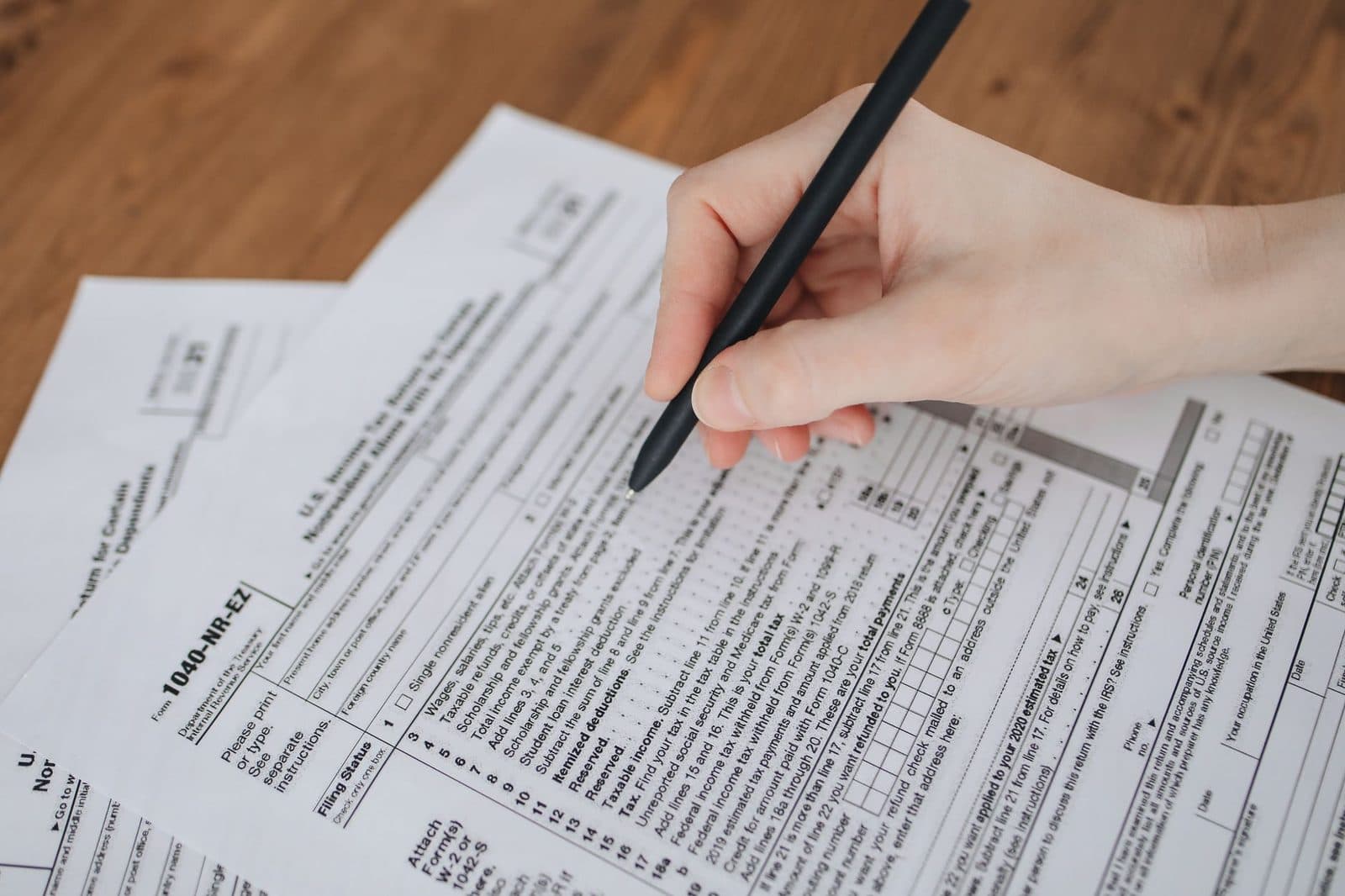
Short answer: if Canada remains, alongside Japan and Germany, one of the few wealthy countries where the fax machine still runs at full tilt, it isn't out of conservatism. It's because healthcare there is provincial, because electronic medical records don't talk to one another, and because personal information laws — federal PIPEDA, Quebec's Law 25, Ontario's PHIPA — long recognized the fax as a "reasonably secure" channel where ordinary email was not. The result: in 2026, three worlds still pick up the line in large numbers in Canada — doctors' offices and hospitals, community pharmacies, and insurers (life, disability, dental, auto insurance). From France, Belgium or Germany, you dial it just like the United States: 00 1 followed by the ten digits of the Canadian number, area code included (514, 418, 438, 450, 604, 416…).
About MondialFax. This article is an informational guide, with no connection to any professional college, insurer or Canadian agency. MondialFax sends faxes free of charge and without registration to seven destinations (France, Belgium, Germany, Spain, Italy, Portugal, Canada) from a browser, with a daily sending limit. It does not assign a number and does not provide reception. See the Canada page and the directory of dialling codes.
The real driver: healthcare run as thirteen systems
In Canada, healthcare is not Ottawa's responsibility but that of the provinces and territories. There is therefore no national medical record, but a patchwork: the Dossier Santé Québec (DSQ) and Carnet santé Québec in Quebec, ConnectingOntario and ClinicalConnect in Ontario, Netcare in Alberta, CareConnect in British Columbia. Each works perfectly well within its own perimeter. Between a practice in Gatineau and a specialist in Ottawa — separated by a river, but also by two information systems — the only channel that works without an interoperability project is… the fax.
Two often-underestimated factors add to this:
- The way medicine is practised. A large share of Canadian family physicians work in small private practices, with electronic medical record (EMR) software freely chosen from among dozens of certified products. The referral therefore leaves the EMR for a fax number, because that's the only entry point shared by every recipient.
- Geography. In the territories and remote regions — Nunavut, Northern Quebec, northern Ontario — bandwidth remains uneven. A two-page transmission over a phone line goes through when a web platform won't load.
Canada Health Infoway, the pan-Canadian organization funding digital health projects, has in fact made replacing the fax an explicit goal of its eReferral and e-prescribing programs. That's an admission, from the institution itself, that the fax remains the backbone of clinical exchanges.
The three pockets holding out in 2026
1. Doctors' offices, clinics and hospitals
This is the heart of the phenomenon. The flows still faxed daily:
| Flow | Sender → recipient | Why the fax holds out |
|---|---|---|
| Specialist referral request | general practitioner → specialty clinic | No universal eReferral outside Ontario and Alberta |
| Imaging and laboratory results | private lab → practice | Heterogeneous EMRs, paid interfaces |
| Disability and return-to-work forms | physician → employer, insurer | Handwritten signature expected |
| Interprovincial record transfers | clinic → clinic | No bridge between DSQ, Netcare, CareConnect |
| Orders for physiotherapy, orthotics, home care | physician → provider | Small organizations with no portal |
For a patient or relative in Europe who has to send a document to a Canadian clinic — a certificate, a medical history, a signed form — the reality is that the fax number is still often listed on the clinic's website, where no email address is published.
2. Community pharmacies
This is the liveliest pocket, and the most heavily regulated. The provincial professional colleges — the Ordre des pharmaciens du Québec, the Ontario College of Pharmacists, the College of Pharmacists of British Columbia — tightly govern how a prescription may be received. For years, the fax was the only remote transmission method explicitly accepted, provided it came directly from the prescriber's office and not from the patient's hands. That last rule is crucial and widely overlooked: a prescription the patient faxes themselves is, in principle, not valid.
E-prescribing is advancing fast: PrescripTIon in Quebec, PrescribeIT (run by Infoway) in the rest of the country. But adoption remains partial, and as long as a single prescriber in the catchment area isn't connected, the pharmacy keeps its fax machine switched on. Many Canadian pharmacies have moved to fax-to-email, which spares them printing: the paper volumes in a neighbourhood pharmacy still justify, among the laggards, compatible toner cartridges and a cross-cut document shredder for sheets containing health information.
3. Insurers and group plans
The big Canadian insurers — Sun Life, Manuvie, Desjardins Assurances, Croix Bleue, La Capitale — all have modern portals for routine claims. But as soon as you step outside the standard cases, the fax number reappears:
- long-term disability claims, with medical reports attached;
- dental and out-of-network paramedical claims;
- assessments and counter-assessments in auto insurance (outside Quebec's public scheme managed by the SAAQ);
- living benefits files and travel insurance, often handled by third-party administrators.
On the public side, the picture is more nuanced: the RAMQ, Revenu Québec, Service Canada and IRCC are pushing their online services hard (clicSÉQUR, My Service Canada Account, the IRCC portal) and the fax is now only a residual channel there, kept for certain forms and for professionals. We covered this institutional landscape in detail in the article on the fax machine in Quebec in 2026: the rule to remember is that, for a public body, you must always check the channel indicated on the form itself before faxing.
What Canadian privacy law (really) says
You often read that "Canadian law requires the fax." That's false. No legislation requires it. What the laws demand is a level of protection proportionate to the sensitivity of the information.
- PIPEDA (the federal Personal Information Protection and Electronic Documents Act) requires appropriate security safeguards, without prescribing any technology.
- Law 25 in Quebec (formerly Bill 64), fully in force since 2023–2024, has tightened obligations: privacy impact assessments, notification of confidentiality incidents, a designated privacy officer.
- In Ontario, PHIPA governs health information custodians. The Information and Privacy Commissioner of Ontario (IPC) has published very clear guidance after several misdialled-fax incidents, recommending that fax use be reduced.
In other words: the fax isn't protected by law, it is tolerated, and increasingly scrutinized. The dominant risk in Canada isn't technical interception, it's the wrong number — one digit off and a medical record lands at a garage. Hence the universal recommendation from professional colleges: a list of pre-saved numbers, a cover page with a confidentiality notice, and verification of the transmission report. If you're building that habit into a team, our fax cover page template covers the wording expected on both sides of the Atlantic.

Provincial plans to move on
Unlike Germany or Italy, Canada has no shutdown date for the fax. But several projects are moving forward, and it's worth knowing where each province stands:
- Ontario — the most proactive province. Ontario Health has announced the goal of eliminating the fax from the health system and is rolling out Ocean eReferral as well as standardized EMR-to-EMR exchanges. This is where faxing will retreat fastest.
- Quebec — the strategy runs through the Dossier santé numérique and through PrescripTIon for e-prescribing. The local vocabulary remains "télécopieur" and "courriel"; in many clinics, the physical fax machine has already been replaced by an email reception service, without the number changing.
- Alberta — Netcare and Connect Care cover the province broadly, which has mechanically reduced transmissions.
- British Columbia — CareConnect and the PrescribeIT rollout are progressing, but private practices remain heavily dependent on the fax.
- Atlantic provinces and territories — slower adoption, connectivity constraints; the fax is holding firm.
On the network side, finally, Canada has no public copper switch-off timetable comparable to Europe's. The major carriers (Bell, Telus, Rogers) are gradually migrating customers to fibre and voice over IP, which produces the same symptoms as elsewhere: negotiation failures, lines dropped mid-transmission. We compared these timetables in The end of copper outside France.
Sending a fax to Canada from Europe: how to do it
Dialling the number
Canada shares the North American Numbering Plan with the United States: the country code is +1, followed by a three-digit area code and then seven digits.
| From | What to dial |
|---|---|
| France, Belgium, Germany, Spain, Italy, Portugal | 00 1 + area code + 7 digits |
| International format | +1 514 123 4567 |
A few useful area codes: 514, 438, 450, 579 (Montreal and surrounding belt), 418, 367 (Quebec City and the east), 819, 873 (Outaouais, Mauricie, Abitibi), 416, 647, 437 (Toronto), 613 (Ottawa), 604, 778 (Vancouver), 902 (Nova Scotia, Prince Edward Island).
Beware of toll-free numbers in 800, 833, 844, 855, 866, 877, 888: they are often unreachable from abroad, including by fax. If an insurer or agency only displays a toll-free number, look for its ten-digit local equivalent, usually printed in small type at the bottom of forms.
Factoring in the time difference
A fax sent at 9 a.m. from Paris arrives at 3 a.m. in Montreal: the machine is on, but nobody collects anything before opening time. Worse, some practices cut the line overnight. The comfortable window for hitting business hours in Quebec is between 3 p.m. and 10 p.m., Paris time. Canada spans six time zones, from Newfoundland (UTC−3:30) to the Pacific (UTC−8), and the daylight saving changeover dates don't line up with Europe's: for two to three weeks a year, the Paris–Montreal gap drops from six hours to five. The details are in our guide Faxing across time zones.
Preparing the document
Canadian documents involve two physical pitfalls:
- Paper size. Canada uses Letter (216 × 279 mm), not A4. A scanned A4 goes through without trouble, but if you print a Canadian form on A4 and rescan it, the margins shift and the signature boxes can be cut off. Check the preview before sending.
- Legibility. Insurance forms contain tiny boxes. To scan a signed document cleanly without bulky equipment, a portable document scanner — or simply a mobile scanning app in black-and-white mode at 200 dpi — gives better results than a handheld photo. If you fill in a lot of paper forms, a black-ink rollerball pen remains preferable to light blue ink, which disappears over fax.
For repeated exchanges with the same recipient, also consider putting together a reference file: Letter-size expanding file folders prevent A4 and Letter sheets from getting mixed up in the same filing system, a classic source of errors in transatlantic files.
Confirming arrival
A technically successful transmission isn't a transmission that's been read. Three habits:
- keep the transmission report (date, time, number of pages, number dialled);
- write a file reference and a callback method (email, phone) on the cover page;
- call the next day, during local business hours, to confirm receipt when the document is critical (an insurance deadline, an immigration file).

Frequently asked questions
Can I fax a prescription to a Canadian pharmacy myself?
No, as a rule. The provincial colleges require that a faxed prescription come from the prescriber. A prescription sent by the patient is treated as a copy and may be refused. Have the medical office fax the document instead, or ask for an electronic prescription.
Does a fax have evidentiary value in Canada?
It is admissible as evidence, like any document, but its probative weight depends on the context and on the transmission report. It confers neither a certified date nor a read receipt. For evidence mechanisms, see our feature on the fax delivery receipt.
Can you send advertising faxes to Canada?
It is very tightly regulated. The CRTC enforces the Unsolicited Telecommunications Rules: prior consent, full identification of the sender, an opt-out mechanism, and compliance with the National Do Not Call List. The fines are real. The topic is covered in detail in Fax mailing in 2026.
Do Canadian hospitals respond to faxes sent from Europe?
Technically yes, the lines accept international calls. But an admissions department prioritizes what comes from an identified prescriber. Always state the patient's name, date of birth and, if you have it, their provincial health insurance number on the cover page.
Do you need a fax machine to send a fax to Canada?
No. An online service is enough: the document leaves from a browser, and the phone line sits on the provider's side. It's in fact the only practical solution from Europe, where keeping an analogue line for a handful of transmissions no longer makes sense now that the PSTN is gone.
Key takeaways
- Canada still faxes because its healthcare is provincial and its medical records non-interoperable, not out of cultural preference.
- Three pockets dominate: practices and hospitals, community pharmacies, insurers and group plans.
- No law requires the fax; PIPEDA, Law 25 and PHIPA require a level of security, and the privacy commissioners recommend reducing its use instead.
- Ontario is the province furthest along in phasing it out; Quebec is advancing via the Dossier santé numérique and PrescripTIon; the Atlantic provinces and territories remain dependent.
- From Europe:
00 1+ ten digits, avoid toll-free numbers, aim for 3 p.m.–10 p.m. Paris time for Quebec, and watch out for the Letter format. - To send without any equipment, the free sending form covers Canada; details on the Canada page.
Tagsfaxdestinationspaperless